New Car Protection: Why the First 6 Months Matter Most

Understanding why modern paint is more vulnerable than ever and how early protection saves you money while maximizing your vehicle's appearance and value.

By Aaron Grant

TL;DR

  • Modern car paint is thinner than ever: Post-2020 vehicles have only ~50 microns of total paint thickness (all layers combined)
  • UV protection degrades immediately: Clear coat UV absorbers have a 5-year half-life - protection drops 50% every 5 years
  • The first 6 months are critical: Protecting perfect paint costs less than correcting damage later ($500-1,500 savings typically)
  • Early protection maximizes value: Ceramic coating bonds best to undamaged clear coat and provides longest lifespan
  • Nelson's UV exposure matters: High UV index accelerates paint degradation, making early protection particularly valuable
Factor New Paint (0-6 months) Older Paint (6+ months)
Preparation Required Minimal (decontamination only) Correction needed typically
Cost for Coating $1,200-1,600 (sedan) $1,800-2,400+ (with correction)
Clear Coat Available Maximum (all 38-50 microns intact) Reduced (swirls/damage present)
Coating Performance Optimal bonding and longevity Good but compromised surface
UV Protection Status 100% factory protection intact Degradation already begun

You've just invested in a new car—congratulations. Whether it's a pristine model fresh from the showroom or a nearly-new vehicle with low kilometres, that feeling of ownership is hard to beat.

But here's something most new car owners don't realise: your paint is already vulnerable, and the clock is ticking.

As Nelson's certified ceramic coating specialists, we see this pattern repeatedly. Vehicle owners wait, thinking their new paint doesn't need protection yet. Then, six months or a year later, they notice the first swirl marks, the slight dulling of the finish, or water spots that won't wash away. By then, what could have been simple protection now requires paint correction—adding hundreds or even thousands to the cost.

Let's discuss why the first six months matter most for your investment, and what you can actually do about it.

The Reality About "New" Car Paint

When you collect your new vehicle, the paintwork looks flawless. It should—that's what you paid for. However, that perfect finish isn't as protected as you might assume.

Modern Paint is Thinner Than Ever

Critical Fact: Modern vehicle paint is significantly thinner than older vehicles.

Modern Vehicles (Post-2020):

  • Total paint thickness: ~50 microns (all layers combined)
  • Clear coat alone: 38-50 microns
  • Some vehicles measured: as little as 30 microns total
  • For reference: Human hair = 70 microns thick

Older Vehicles (Pre-2020):

  • Clear coat alone: Often 50+ microns
  • Total paint systems: 100-180+ microns common
  • More margin for correction and repair
  • Thicker protection layers overall

Why the Change:

  • Harder, more UV-resistant clear coat formulations
  • Advanced robotic application allows thinner, uniform layers
  • Weight reduction for fuel efficiency
  • Cost savings for manufacturers

What This Means for You: Less clear coat available means less protection margin. Modern paint has minimal room for damage or aggressive correction. Early protection preserves what little clear coat you have.

Your Clear Coat Has a Half-Life

The 5-Year Half-Life Reality:

Your vehicle's clear coat contains UV absorbers that degrade over time:

  • Year 0 (New): 100% UV protection capacity
  • Year 5: 50% UV protection remaining
  • Year 10: 25% UV protection remaining
  • Year 15: 12.5% UV protection remaining

Why This Matters: UV absorbers are heavier than clear coat resin. They concentrate in the uppermost layer of clear coat - approximately 50% of your paint's total UV protection resides in this top surface layer. Any damage to this surface layer doesn't just affect appearance. It compromises your paint's ability to resist UV damage moving forward.

In Nelson's High-UV Environment: The degradation process accelerates. Nelson experiences some of New Zealand's highest UV index ratings throughout the year. From the moment your car leaves the factory, UV radiation begins breaking down those protective additives.

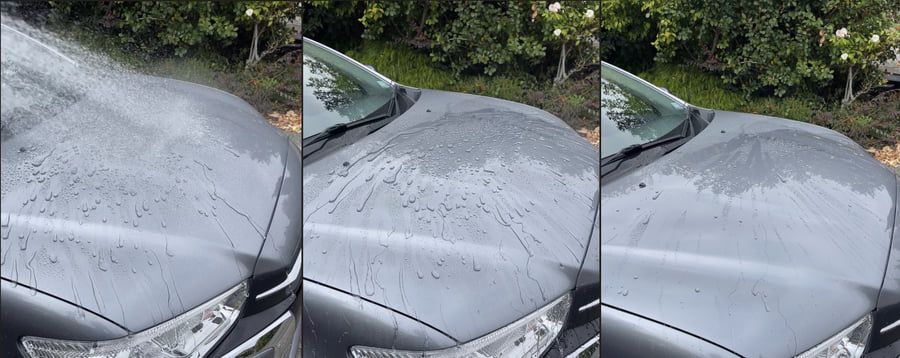
Water beading on ceramic coated paint demonstrating hydrophobic protection

What Actually Happens to Unprotected Paint

Let's walk through what occurs during those first crucial months without protection.

Month One: The Invisible Beginning

The damage isn't visible yet, but it's already starting. Your first few washes—even careful hand washing—may create light swirl marks in the clear coat. These micro-scratches are inevitable with any contact washing, but they're particularly easy to create on fresh, unprotected paint.

UV radiation begins its work immediately. Each day in Nelson's sun, those UV absorbers in your clear coat degrade slightly. Bird droppings from your first week parked under a tree? They're etching into that unprotected clear coat right now. Tree sap from springtime? It's bonding aggressively to the bare paint surface.

Most owners don't notice anything yet. The car still looks brilliant in the driveway. But the foundation for future problems is being laid with every sunny day and every wash.

Month Three: The First Warning Signs

By three months, careful observers might notice subtle changes. Under direct sunlight or proper lighting, faint swirl marks may be visible, especially on darker colours. Water doesn't bead quite as impressively as it did when the car was brand new. Some contaminants seem to stick more stubbornly during washing.

The clear coat's UV protection has already begun its gradual decline. In Nelson's climate, this three-month mark represents dozens of high-UV days and potentially hundreds of hours of sun exposure. The molecular bonds in your paint are breaking down—slowly, but measurably.

Month Six: The Point of No Return

Six months represents a critical threshold. By now, most vehicles show visible signs of unprotected paint:

  • Swirl marks are clearly visible on dark colours under direct sunlight
  • Water beading has diminished noticeably compared to when new
  • Contaminant bonding is stronger—bird droppings, bug splatter, and road grime stick more aggressively
  • Surface roughness may be detectable when running your hand over the paint
  • Early UV damage has begun, though it may not be obvious yet

Here's the critical point: applying ceramic coating to paint in this condition now requires paint correction first. What could have been a straightforward protection process on perfect paint now involves additional time and cost to restore the surface before protection can be applied properly.

The Critical Window: Why Sooner Beats Later

The first six months represent your best opportunity to protect your investment efficiently and cost-effectively. Here's why acting sooner makes both practical and financial sense.

Perfect Paint Means Lower Cost

When your paint is still in pristine condition, ceramic coating application is relatively straightforward. We still perform proper decontamination and surface preparation, but we're not correcting damage—we're preserving perfection.

This distinction matters financially. Paint correction adds several hours of skilled labour and specialized products to the process. On a vehicle requiring even a single-stage correction, you might add $500-800 to the total investment. More severe correction needs can push this significantly higher.

New paint, protected early, avoids this cost entirely. You're investing in prevention rather than paying for both correction and protection.

Maximum Coating Longevity

Ceramic coatings bond best to clean, undamaged clear coat. When we apply coating to fresh paint, we're bonding to the full thickness of your clear coat—every one of those precious 38-50 microns.

Wait until swirl marks and light scratches have accumulated, and we need to remove some of that clear coat through correction before coating application. The coating still performs well, but you've permanently reduced the total paint thickness available for future maintenance and protection.

Remember, you only get one factory clear coat. Every micron of clear coat removed through correction is gone forever. Protecting early preserves the maximum amount of your original paint.

Professional ceramic coating provides superior protection for new car paint

Full UV Protection From Day One

Here's where early protection truly shines. Quality ceramic coatings contain their own UV inhibitors that work alongside your clear coat's built-in protection. Applied to new paint, you're stacking these protective systems when both are at peak effectiveness.

The coating creates a sacrificial barrier that absorbs UV radiation before it reaches your clear coat. This means your clear coat's UV absorbers degrade more slowly, potentially extending that five-year half-life significantly. We've seen well-protected vehicles maintain better paint condition at ten years than unprotected vehicles show at five years.

In Nelson's high-UV environment, this protection proves particularly valuable. Every summer day with your vehicle parked outdoors represents UV exposure that's attacking either your coating or your clear coat. We'd much rather it attack a renewable coating than your irreplaceable clear coat.

What About Dealer-Applied Coatings?

Many dealerships now offer "ceramic coating" or "paint protection" packages with new vehicle purchases. While we appreciate that dealers recognize the importance of paint protection, these dealer-applied products often differ significantly from professional ceramic coatings.

Understanding Dealer Products

Most dealer "ceramic coatings" are actually spray sealants or hybrid products—not true ceramic coatings. These products:

  • Apply quickly (often in under an hour)
  • Provide 6-12 months of protection typically
  • Cost $500-1,500 at the dealer
  • May require annual reapplication
  • Often include only basic surface preparation

Some dealers do offer legitimate ceramic coating, but the application typically occurs in the dealer's regular workshop environment rather than a controlled, dust-free facility. The preparation work may be limited compared to what specialist detailers provide.

The Professional Difference

Professional ceramic coating application at a specialist facility involves:

  • Controlled environment (temperature, humidity, dust-free)
  • Thorough decontamination process
  • Paint thickness measurement
  • Proper surface preparation
  • Professional-grade products (like Gtechniq Crystal Serum Ultra)
  • Multi-year warranties (5-9 years typically)
  • Detailed application by certified installers

If you've already purchased a dealer coating package, don't worry—you can often apply professional ceramic coating over it once the dealer product wears off. Just be honest with your coating specialist about what's already on the vehicle so we can plan the proper preparation process.

The New Car Protection Decision

Not every new car owner needs to rush out and get ceramic coating immediately. However, understanding your options and timeline helps you make the right decision for your situation.

When Immediate Protection Makes Sense

Consider protecting your new vehicle right away if you:

  • Plan long-term ownership (5+ years)
  • Park outdoors regularly, especially in direct sun
  • Want minimal maintenance and easiest cleaning
  • Value appearance and want to maintain that new-car look
  • Live in Nelson's UV-intense environment
  • Drive a high-value vehicle where resale matters
  • Prefer darker paint colours (black, dark blue, dark grey) that show damage more readily

For these situations, early ceramic coating application delivers the best return on investment. You're protecting when it's most cost-effective and when the coating will perform at its best.

When You Might Wait

Delaying protection might be reasonable if you:

  • Plan short-term ownership (under 2 years)
  • Have garage parking that shields from UV exposure
  • Maintain vehicles meticulously and understand proper care techniques
  • Budget constraints make the investment difficult right now
  • Drive a work vehicle that sees harsh conditions regardless of protection

Even in these situations, some level of protection typically makes sense—perhaps a quality sealant or spray ceramic coating that offers shorter-term protection at lower cost. The key is having a plan rather than simply neglecting paint protection entirely.

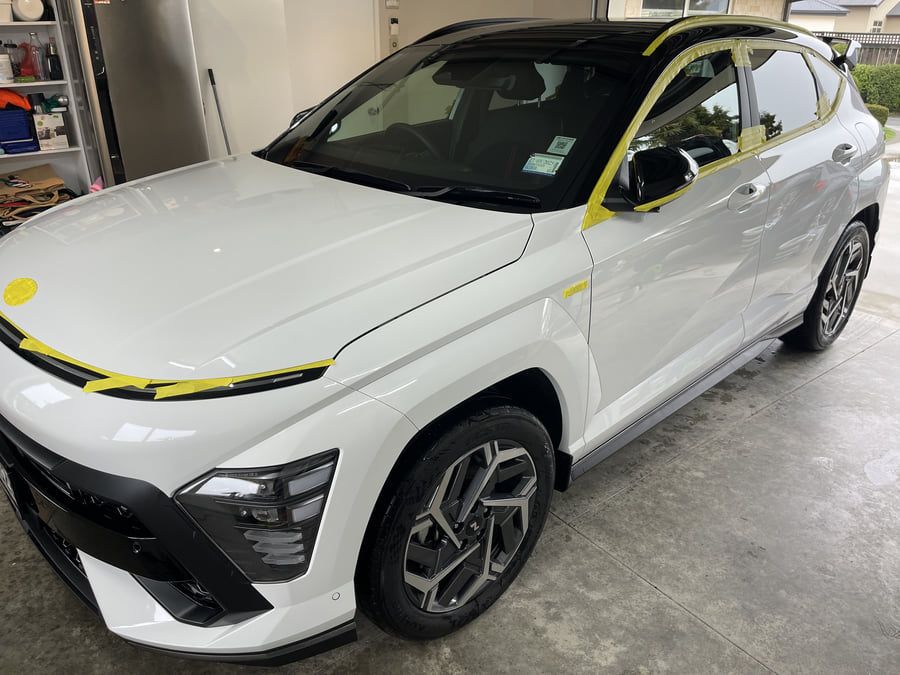
Newly ceramic coated white vehicle showing enhanced gloss and protection

What Early Protection Actually Delivers

Let's be realistic about what you get when you protect your new car's paint within the first six months.

Immediate Benefits

From the moment we hand back your keys, you'll notice:

  • Water behaviour that's dramatically different—tight beading and sheeting rather than water sitting on surfaces
  • Cleaning ease that makes weekly washing quicker and more effective
  • Contamination resistance where bird droppings, tree sap, and bug splatter don't bond aggressively
  • Enhanced appearance with deeper colour and more reflective gloss
  • Peace of mind knowing your investment has protection

These aren't subtle differences. The hydrophobic properties of quality ceramic coating make a noticeable, practical difference in how your vehicle looks and how easy it is to maintain.

Long-Term Value

Over the years, early protection provides:

  • Preserved paint condition that looks significantly better than unprotected equivalents
  • Reduced correction needs since the coating prevents most light damage
  • Maintained UV protection as the coating shields your clear coat from sun damage
  • Higher resale value from better-maintained appearance
  • Lower maintenance costs from reduced washing frequency and easier cleaning

We regularly see vehicles with 5-year-old ceramic coatings that look better than 2-year-old unprotected vehicles. That's the power of early protection—you're maintaining the condition you started with rather than constantly fighting to recover from accumulated damage.

The Ceramic Coating Process for New Vehicles

Understanding what's involved helps set realistic expectations for protecting your new car.

Inspection and Assessment

Even on new vehicles, we start with thorough inspection:

  • Paint thickness measurement to document factory condition
  • Surface examination under proper lighting
  • Contaminant identification (dealer prep may leave residue)
  • Panel consistency check to identify any factory correction

This assessment takes 20-30 minutes but provides valuable baseline documentation and ensures we apply the appropriate preparation process.

Preparation Work

New vehicles still require proper preparation:

  • Decontamination to remove transport film, dealer residue, and any bonded contaminants
  • Surface cleaning with specialized products
  • Final inspection under lighting that reveals any remaining issues
  • Panel wipe with solvents to ensure perfect bonding conditions

While new paint doesn't need correction, proper preparation remains essential. We're creating the ideal surface for coating bonding, which directly affects longevity and performance.

Coating Application

The application process for new vehicles follows our standard protocol:

  • Controlled environment in our facility
  • Section-by-section application for consistent coverage
  • Proper dwell time as specified by the manufacturer
  • Careful levelling to prevent high spots
  • Multi-layer application for products like Gtechniq Crystal Serum Ultra + EXO

For a standard vehicle, the complete process typically takes one full day. We don't rush—proper application technique matters more than speed.

Curing Period

After application, your coating needs time to cure properly:

  • First 24 hours: Keep completely dry and protected
  • First 7 days: No washing, avoid rain when possible
  • After 7 days: We provide complimentary wash training to teach proper maintenance techniques

This curing period allows the coating to achieve its full hardness and hydrophobic properties. Rushing this stage compromises performance, so we build it into our process and your expectations.

The Investment Conversation

Let's talk honestly about costs, because that's often the deciding factor for new car owners.

Understanding the Numbers

Professional ceramic coating for a new vehicle typically ranges from $800-2,000+ depending on:

  • Vehicle size
  • Coating product selected
  • Preparation requirements
  • Additional services (wheels, glass, trim)

For a standard sedan or small SUV with new paint, expect investment in the $1,200-1,600 range for quality coating like Gtechniq Crystal Serum Ultra.

This might seem significant compared to your new car's other costs. However, consider the alternatives:

Traditional Protection Approach (5 years):

  • Professional wax: $150-200, needed 3-4 times yearly = $2,250-4,000
  • Additional paint correction at year 3 (typically needed): $600-1,200
  • Total: $2,850-5,200

Ceramic Coating Approach (5 years):

  • Professional ceramic coating: $1,200-1,600 (one-time)
  • Annual maintenance (optional): $0-300 yearly
  • Total: $1,200-3,100

The numbers speak clearly. Ceramic coating costs less over time while providing superior protection and easier maintenance. Factor in the resale value preservation, and the financial case becomes even stronger.

Making Your Decision

If you're reading this and you've recently purchased a new vehicle, here are the key questions to ask yourself:

Evaluate Your Situation

How long do you plan to own the vehicle?

Longer ownership (5+ years) strongly favours ceramic coating investment. You'll experience the full benefit of protection while maintaining the best possible condition.

Where does your vehicle spend most of its time?

Outdoor parking in Nelson's UV-intense environment makes early protection particularly valuable. Garage-kept vehicles still benefit but face less aggressive conditions.

What's your budget for the total ownership experience?

Consider protection as part of your total vehicle investment rather than an optional extra. The question isn't "can I afford ceramic coating?" but rather "can I afford not to protect this investment?"

How important is appearance to you?

If you take pride in your vehicle's appearance, ceramic coating makes maintenance easier and results better. If appearance ranks lower in your priorities, perhaps a more basic protection approach suits your needs.

The Six-Month Window

If you're within your first six months of ownership, you're still in the ideal window for cost-effective protection. The sooner you act, the better the value and the longer you maintain that perfect factory condition.

If you've passed six months but are still within the first year, protection remains worthwhile—you'll just likely need some light correction first. The investment increases slightly, but you're still protecting before serious damage accumulates.

Beyond a year, each passing month makes correction more likely and more extensive. We still regularly protect 2-3 year old vehicles, but the preparation requirements and costs are typically higher than early protection would have been.

The GlossWorks Approach to New Car Protection

Our philosophy with new vehicles centres on doing what's right for your specific situation rather than pushing a one-size-fits-all solution.

Honest Assessment

When you contact us about protecting your new vehicle, expect:

  • Realistic timeline for when protection makes most sense
  • Honest evaluation of whether your paint needs correction
  • Clear explanation of what you're getting for your investment
  • Multiple options at different price points
  • No-pressure consultation where we answer your questions

We've turned away business when protection didn't make sense for a customer's specific situation. Building long-term relationships matters more than making every possible sale.

Quality Over Speed

We don't rush new car coatings. Proper surface preparation, controlled application environment, and adequate curing time matter more than quick turnaround. Your vehicle typically spends one full day with us, sometimes more for larger vehicles or more comprehensive packages.

This timeframe ensures we're delivering the protection you're paying for, not just quickly applying product and moving to the next job.

Education and Support

Protection doesn't end when you collect your vehicle. We provide:

  • Complimentary wash training demonstrating proper techniques
  • Maintenance guidance specific to your coating and vehicle
  • Ongoing phone support for questions as they arise
  • Annual inspection options to assess coating performance
  • Realistic expectations about what your coating will and won't do

This support system helps you get maximum value and longevity from your investment.

Frequently Asked Questions About New Car Protection

How soon after purchasing should I protect my new car's paint?

Ideally within the first 3 months, while paint is still in perfect condition. This avoids correction costs and maximizes coating longevity. The first 6 months represent the critical window before significant damage accumulates.

Does new car paint really need protection right away?

Yes. Modern vehicles have thinner paint (around 50 microns total) than older cars. UV protection begins degrading immediately with a 5-year half-life. Early protection preserves factory condition and costs less than correcting damage later.

What's the difference between dealer coating and professional ceramic coating?

Dealer coatings are typically spray sealants lasting 6-12 months, applied quickly in regular workshop environments. Professional ceramic coating uses higher-grade products (80%+ SiO2), controlled application environments, multi-year warranties (5-9 years), and certified installers.

How much does ceramic coating cost for a new car?

For new paint requiring minimal preparation: $1,200-1,600 for sedans, $1,600-2,200 for large SUVs. This is typically $500-1,500 less than coating a vehicle requiring paint correction first.

Can I wait a year before protecting my new car?

You can, but it typically costs more. Most vehicles show swirl marks and contamination by 6-12 months, requiring paint correction before coating. Early protection on perfect paint avoids these additional correction costs.

Will ceramic coating void my new car warranty?

No. Ceramic coating is a protective layer applied over factory paint and doesn't modify the paint system. It won't affect manufacturer warranties. Some dealers even offer ceramic coating themselves.

How long does ceramic coating last on new cars?

Professional-grade coatings like Gtechniq Crystal Serum Ultra provide 5-9 year warranties. When applied to new, undamaged paint, coatings often perform at their best throughout the entire warranty period.

Summary: Why the First 6 Months Matter

The Critical Window: The first 6 months of new car ownership represent your best opportunity for cost-effective paint protection. During this period, you can protect perfect paint before damage accumulates.

Key Facts to Remember:

  1. Modern paint is vulnerable: 50 microns total thickness on 2020+ vehicles vs. 100-180 microns on older cars
  2. UV protection degrades: 5-year half-life means 50% reduction every 5 years
  3. Damage starts immediately: First wash can create swirl marks; UV degradation begins day one
  4. Early protection costs less: $500-1,500 savings by avoiding correction costs
  5. Maximum coating performance: Best bonding and longevity on undamaged clear coat

The Financial Case:

  • New paint protection: $1,200-1,600 typically
  • 6-month-old paint needing correction: $1,800-2,400+ typically
  • Savings from early action: $600-800 average

The Bottom Line: The first six months of new car ownership represent a critical window for paint protection. Modern paint's thinner clear coat and degrading UV protection mean your "new" paint is more vulnerable than previous generations of vehicles. Add Nelson's high UV exposure to the equation, and early protection becomes even more valuable.

The question isn't whether to protect your new vehicle's paint—it's whether you want to do it cost-effectively while the paint is still perfect, or pay more later to correct damage before protection.

About the Author

Written by Aaron Grant, professional car detailing specialist and owner of Glossworks Nelson. As Nelson's only International Detailers Association (IDA) Certified Detailer in the South Island and Gtechniq Accredited Installer, Aaron brings over 15 years of restorative industry experience to automotive care. He specialises in helping new car owners understand the importance of early paint protection, ensuring they make informed decisions that preserve their investment from day one.

Ready to Protect Your New Vehicle?

Contact us today for a no-obligation consultation about protecting your new car's paint. We'll assess your vehicle and provide honest recommendations based on your specific situation.

Get a Quote