
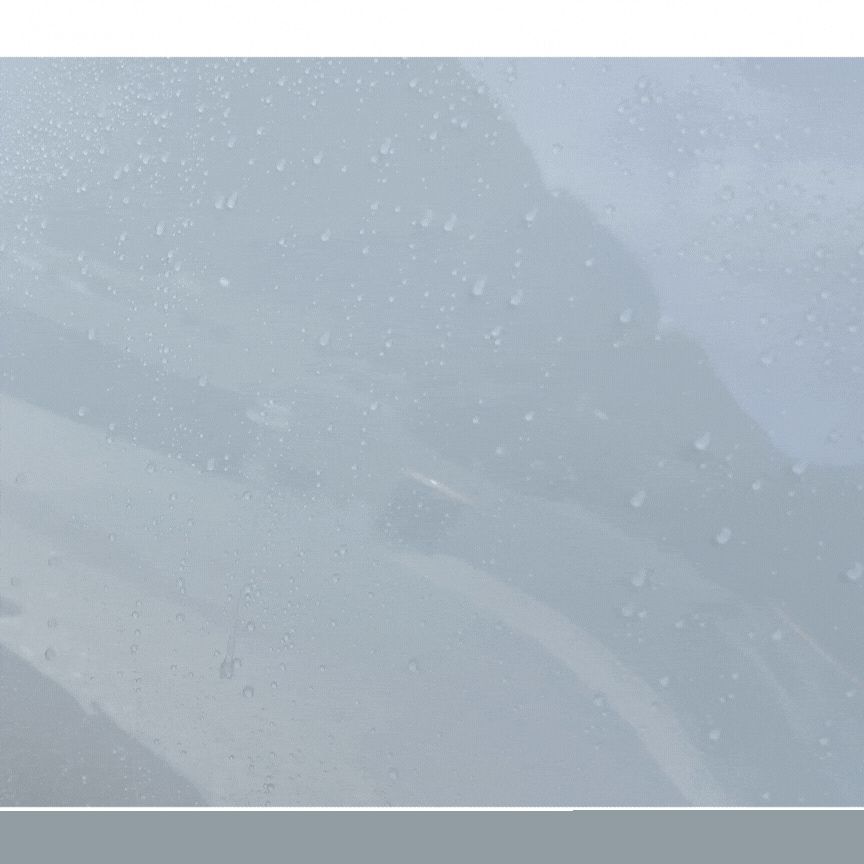
Tight water beading is the most visible sign of a healthy ceramic coating — when the beads start to flatten, the coating is telling you something
TL;DR
- •Wax: 1–3 months
- •Consumer/DIY coatings: 1–2 years (often much less in practice)
- •Professional 5-year coating: 3–5 years average, longer with good care
- •Professional 9-year coating: 7–9+ years with proper maintenance — backed by manufacturer warranty
- •Nelson's climate: high UV and coastal salt air accelerate coating degradation — regular maintenance matters more here than most of NZ
- •Biggest killer: incorrect washing (automatic car washes, wrong products) — not the environment
- •Warning sign: water no longer beading or sheeting — time to assess and possibly top up or recoat
The short answer: a professionally applied entry-level coating typically lasts 4–5 years. A 9-year professional coating can last up to 9 years. Consumer and DIY products last 1–2 years. Wax lasts 1–3 months.
But those numbers assume good maintenance and a decent application. The gap between a coating that lasts 3 years and one that lasts 9 isn't just the product — it's how it was applied, what condition the paint was in beforehand, and how the car is looked after in the years that follow.
How Long Does Each Type of Ceramic Coating Last?
Not all ceramic coatings are the same product. There's a significant difference between a professional coating applied by a trained installer and a consumer spray you pick up from a car parts store — in both chemistry and real-world lifespan.
| Coating Type | Realistic Lifespan | Notes |
|---|---|---|
| 5-Year Professional Coating | 4–5 years | With good maintenance — this is the most common starting point |
| 9-Year Professional Coating | Up to 9 years | Better UV resistance and chemical protection — more durable in demanding climates |
| Consumer / DIY Ceramic Coating | 1–2 years | Lower SiO2 concentration and not installer-grade — protection is real but limited |
| Ceramic Spray Product | 3–6 months | More of a paint enhancer than a genuine coating — useful for topping up, not a standalone |
| Carnauba Wax | 4–8 weeks | Good product, very limited durability — needs constant reapplication |
Why the Professional Tier Lasts So Much Longer
Professional-grade coatings use significantly higher concentrations of the active ceramic compounds — often 80%+ compared to 30–60% in consumer products. They also require a properly decontaminated, polished surface to bond correctly. That prep work, combined with a trained application in controlled conditions, is what delivers the longevity gap. You can't get a 9-year result from a product that's formulated for 1–2 years, regardless of how carefully you apply it.
What Are the Biggest Factors That Affect How Long a Ceramic Coating Lasts?
Four things determine whether your coating reaches its rated lifespan or falls short of it. The first is the one most people don't think about.
Paint Preparation at Application
The most important factor — and the one that's set before the coating even goes on. If the surface wasn't properly decontaminated and any defects corrected beforehand, the coating bonds to contamination rather than clean paint. That shortens its life significantly and nothing you do in maintenance can fix it. A good prep job at the start is what makes the difference between a coating that lasts and one that doesn't.
Wash Technique and Products
The single biggest thing you control after the coating is applied. Automatic car washes with spinning brushes introduce micro-scratches into the coating surface over time — degrading the hydrophobics and wearing down the hardness. Harsh cleaning chemicals and the wrong shampoos break down the coating chemistry. Proper hand washing with a pH-neutral shampoo is what keeps a coating performing for its full rated life.
Environmental Exposure
How and where you park matters. A garaged car in a moderate climate will have a coating that lasts longer than the same car parked outside daily in Nelson's summer UV. Salt air, industrial fallout, bird droppings, and tree sap all place constant chemical load on the coating — it's doing its job by taking the hit, but the more consistent that load, the faster it depletes.
Coating Tier and Product Quality
A 9-year professional coating is formulated differently from a 5-year entry coating — higher active compound concentration, more robust UV inhibitors, and typically a harder cured surface. Both are professional-grade, but in Nelson's demanding environment the premium tier provides a meaningful longevity advantage. The gap between professional and consumer-grade is even more significant.
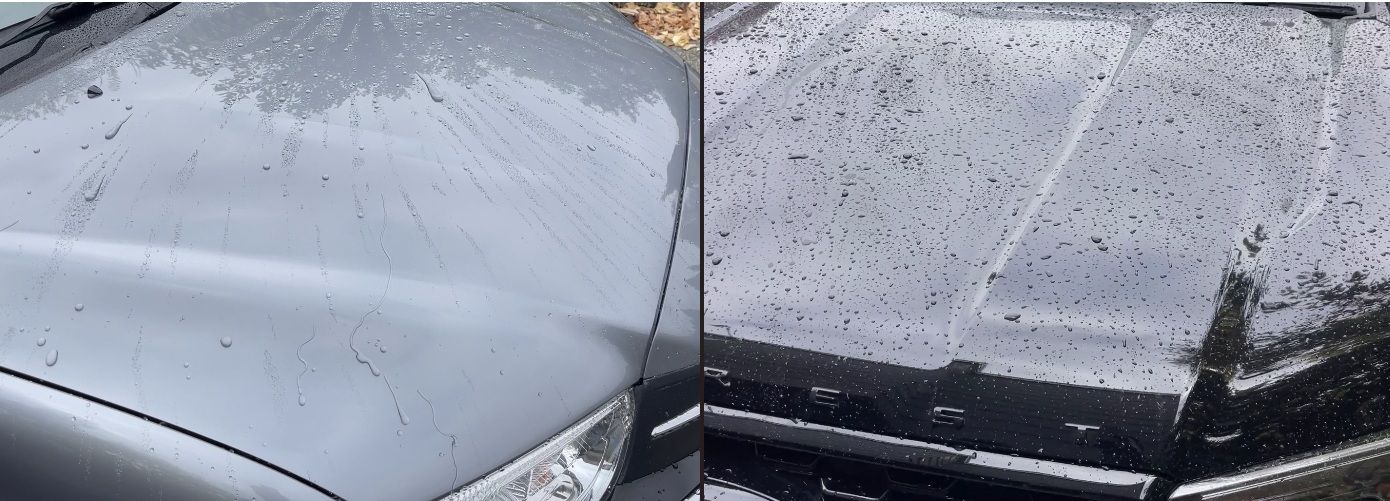
Water behaviour is the clearest indicator of coating health — tight beads mean the coating is active, flat sheeting means it's degrading
How Does Nelson's Climate Affect How Long a Ceramic Coating Lasts?
Nelson's environment is genuinely more demanding on coatings than most New Zealand locations. It's not an excuse — it's a real factor worth understanding when setting expectations for your coating's lifespan.
High UV Exposure
Nelson consistently ranks among the highest UV-exposure regions in New Zealand. UV is the primary driver of paint oxidation — and while ceramic coating provides genuine UV protection, a more intense environment depletes that protection faster than a more moderate climate.
Coastal Salt Air
Salt air is mildly corrosive — it's one of the things the coating is specifically designed to resist. But in high-salt environments, that chemical load is constant. Cars regularly driven near the coast or Tasman Bay will experience more coating depletion than vehicles kept inland.
Seasonal Extremes
Nelson's dry, hot summers followed by wet winters create thermal cycling on the paint surface. In summer, bird droppings and tree sap etch faster in the heat — prompt removal is more important here than it would be in a cooler climate. These aren't reasons to avoid coating — they're reasons a quality coating matters.
What This Means in Practice
A professional coating applied and maintained well in Nelson will still deliver its rated lifespan. The difference is that poor maintenance or a lower-grade product will degrade noticeably faster here than in other parts of NZ. For that reason, we typically recommend the 9-year professional coating for vehicles parked outside in Nelson — the extra durability justifies the cost difference more here than it would in Dunedin or Wellington.
What Maintenance Actually Extends a Ceramic Coating's Life?
Most of what keeps a coating in good condition is straightforward — it just takes a bit of consistency. The things that damage coatings fastest are usually habits rather than accidents.
Wash by hand with a pH-neutral shampoo
Alkaline or acidic cleaners break down the coating chemistry over time. pH-neutral shampoos clean the surface without stripping the coating. This is the single most important habit to get right — we show you exactly how we do it as part of every job we complete.
Avoid automatic car washes
Spinning brush washes are one of the fastest ways to degrade a ceramic coating. The brushes introduce swirl marks into the coating surface, eroding the hydrophobics and shortening lifespan. Touchless automatic washes are less damaging but still use harsh chemical agents — hand washing is always the better option.
Remove bird droppings and tree sap promptly
These are mildly acidic and will etch through the coating if left long enough — especially in Nelson's summer heat. A coating protects the paint underneath, but it can still be damaged. A quick rinse and wipe is all it takes. Don't let it sit for days.
Use clean wash media
A contaminated wash mitt drags grit across the coating surface. We use a two-bucket method with soap in both buckets — the wash mitt is cleaned in one bucket before going back to the paint. Never let a dirty mitt go back on the surface. It sounds simple because it is, but most swirl damage comes from wash technique rather than driving.
Check in if the water behaviour changes
If you notice water starting to sheet flat instead of bead and roll, get in touch. Catching coating degradation early often means a lighter-touch solution — a proper decontamination and potentially a top coat — rather than a full reapplication. We're always available for existing clients who want a second opinion on how their coating is performing.
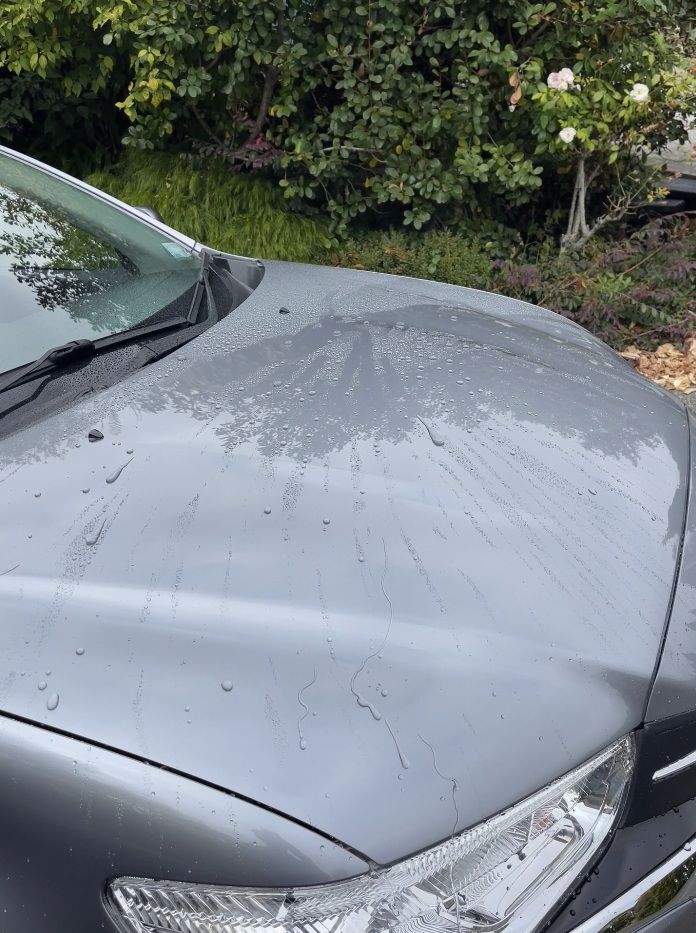
Water sheeting cleanly off the paint — a well-maintained coating continues to perform like this for years
How Can You Tell When a Ceramic Coating Is Starting to Fail?
Coatings don't fail suddenly — they degrade gradually. Knowing what to look for means you can act before it fails completely, which keeps your options and costs lower.
Early Warning Signs
- •Water beading flattens out — droplets that used to bead tightly start to sheet instead of rolling off cleanly
- •Car gets dirtier faster — as hydrophobics weaken, dust and grime start to stick more readily between washes
- •Paint feels slightly rougher — contamination that would previously sit on the coating starts to bond to the surface
Signs the Coating Has Failed
- •No water beading at all — water sheets flat across the surface with no hydrophobic response
- •Dull finish in direct sunlight — loss of the deep gloss clarity that characterised the fresh coating
- •Visible water spots — mineral deposits from water sitting on the surface rather than rolling off
Why Acting Early Makes a Difference
A coating in the early warning stage can often be refreshed with a proper decontamination wash and a top coat application — no full paint correction required. A coating that has fully failed and allowed contamination to bond directly to the paint needs more work before it can be recoated. Catching it at the early stage is almost always cheaper and gives a better result.
Should You Recoat Before the Coating Fails Completely?
Yes — and this is one of the more practical decisions you can make as a ceramic coating owner. Waiting until the coating has fully deteriorated before recoating costs more and gives a worse result than acting when the coating is still partly functional.
Recoat — Coating Still Partially Active
Decontamination wash, light prep, new coating applied. Paint underneath is still protected — minimal correction needed. Most straightforward and cost-effective outcome.
Recoat — Coating Recently Failed
More thorough decontamination, possible light correction depending on condition. Paint is largely intact if coating lasted well. Still manageable but more work than early recoating.
Recoat — Coating Failed Long Ago
Contamination and oxidation have likely built up on bare paint. Paint correction required before recoating. Higher cost, longer job, and paint may have suffered permanent damage.
Our Approach
We're always happy to take a look at how a coating is performing, even if we didn't apply the original one. If you're approaching the end of your coating's rated life, or you're noticing changes in how the paint looks and feels, get in touch. A quick assessment often answers the question before any money needs to be spent.
Common Questions About Ceramic Coating Longevity
How long does ceramic coating last in Nelson?
A professionally applied 5-year ceramic coating typically lasts 4–5 years with proper care. A 9-year professional coating can last up to 9 years. Nelson's high UV and coastal salt air place more demand on coatings than more temperate NZ locations, so maintenance matters more here than it would elsewhere.
Does Nelson's climate make ceramic coatings wear out faster?
Yes, to a degree. Nelson consistently experiences some of the highest UV exposure in New Zealand, combined with coastal salt air and seasonal extremes. These conditions are harder on coatings than more moderate climates. A quality professional coating will still last many years, but the difference between good and poor maintenance is more pronounced here than in other parts of NZ.
What is the difference between a 5-year and 9-year ceramic coating?
The main differences are product formulation, hardness, and depth of protection. A 5-year professional coating provides excellent protection and hydrophobics at a more accessible price. A 9-year professional coating uses a more advanced formulation with higher durability, better UV resistance, and typically deeper gloss — but both are professional-grade products that far outperform consumer options.
What maintenance helps ceramic coating last longer?
The biggest factor is wash technique. Avoid automatic car washes — the spinning brushes cause micro-scratches that degrade the coating surface over time. Use a pH-neutral car shampoo, a clean microfibre mitt, and rinse thoroughly. Remove bird droppings, tree sap, and insect residue promptly — especially in summer when Nelson's heat causes them to etch faster.
How can I tell if my ceramic coating is still working?
The clearest sign is water behaviour. A healthy coating causes water to bead tightly and roll off quickly. As a coating ages, water starts to sheet instead of bead, and eventually sits flat on the surface. Other signs include increased dirt adhesion between washes, a slightly duller look in direct sunlight, and paint that feels less smooth to the touch.
Can a ceramic coating be topped up, or does it need to be completely redone?
It depends on how much coating remains. If the coating is degrading but still partly intact, a light decontamination and recoat is often possible without full paint correction — which keeps the cost significantly lower than a fresh application. If the coating has failed completely and contamination has bonded to the paint, more prep work may be needed. Getting it seen before it fails fully is usually the better (and cheaper) outcome.
Want to Know How Your Coating Is Holding Up?
Whether your coating is new, a few years old, or you're not sure what's on your car — we're happy to take a look and give you an honest assessment.
What happens next: Free consultation → Transparent quote → Professional application → Follow-up care