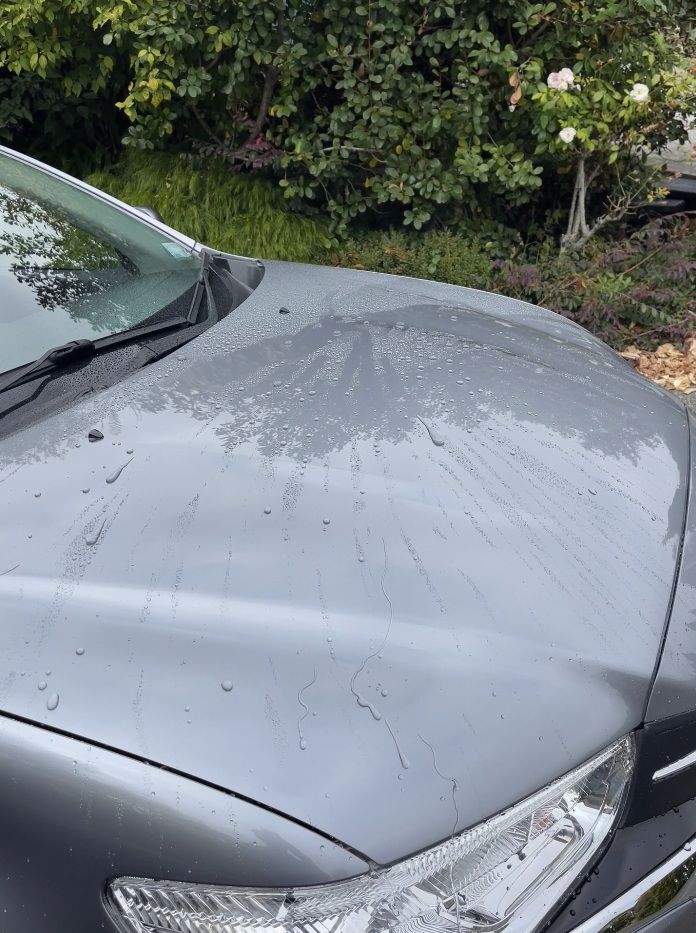
Your coating has stopped beading water. Most people assume it has failed.
It almost certainly has not. The bond is permanent and the coating is still there. What has usually happened is that the surface has clogged with bonded contamination, and a proper decontamination wash brings most of the performance back.
That single misunderstanding causes more unnecessary recoating than anything else in this trade.
Is a coating maintenance-free?
No, and anyone selling it that way is setting you up for disappointment.
What a coating actually gives you is lower maintenance. Washing is easier and needed less often, dirt releases without much scrubbing, and the car stays cleaner between washes. What it does not do is stop contamination landing on the paint in the first place.
Bird droppings, bee droppings, sap and blossom are all acidic. A coating buys you time to get them off before they etch. It does not make them harmless.
The first week
The coating cures over roughly the first week, and the first few days matter most.
- Keep it dry if you can. A garage is ideal, which is where it cures anyway if we did the work.
- Do not wash it for about a week.
- Avoid parking under trees, particularly during blossom or fruit season.
- If something acidic lands on it, rinse gently rather than wiping. Do not scrub during the curing period.
After that first week, normal washing is fine.
How to wash it
The method is the same as any careful wash, it is just easier on a coated car. The full version is in our washing guide, but the essentials:
One bucket, several mitts, so dirty media never returns to the paint. Two buckets works too, with soap in both.
pH-neutral shampoo, nothing with added wax or gloss. This one is specific to coated cars: wax-added shampoos leave a layer on top of the coating that beads water by itself. It looks fine, and it hides whether your actual coating is still performing. You want to be able to see the truth.
Dry it. Do not let tap water evaporate on the panel. Rain carries very little dissolved mineral, tap water carries much more, and that is what leaves spots.
Wash when it needs it. Not weekly out of habit. Every wash is contact.
When beading drops off
The single most common call we get. Here is how to work out what is actually happening.
Check whether washing has got harder
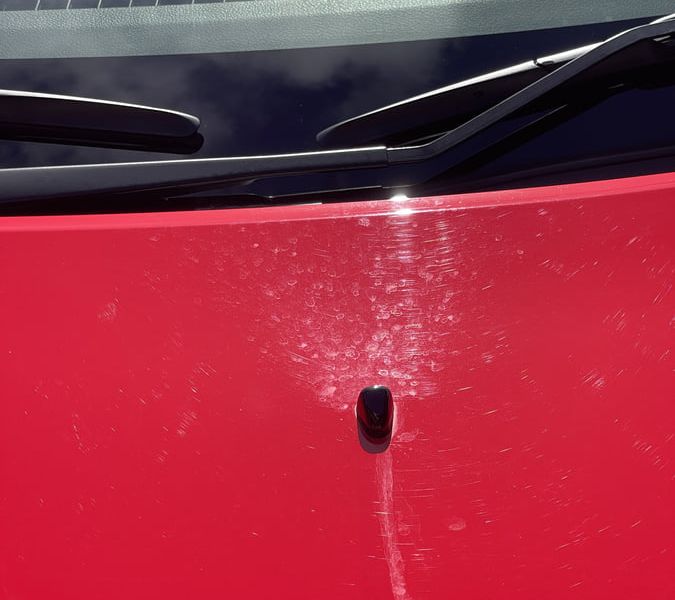
This is the real diagnostic. If dirt is gripping the surface and needs scrubbing where it used to rinse away, the surface has clogged. If washing is still easy but beading looks weaker, it may just be a dirty panel.
Wash it properly and look again
A surprising number of coatings that have supposedly stopped working are simply dirty. Wash it correctly, dry it, then look at the water behaviour on clean paint.
Get it decontaminated
If it is still flat after a proper wash, the surface needs decontaminating. This clears bonded contamination out of the coating and usually restores most of the performance. It is the step that people skip and it makes the biggest difference.
Consider a topper
A topper product over the existing coating restores slickness and water behaviour and adds useful life. Far cheaper than recoating, and the sensible move when the coating itself is sound.
Recoat only if it has genuinely aged out
If the coating has actually cracked or aged, it can be polished off and redone with minimal risk to the paint. That is the last step, not the first.
What actually shortens a coating’s life
Not weather. Washing.
The bond is permanent, much like the clear coat on your car. What the warranty period covers is the coating cracking and aging. What genuinely wears performance down is washing and general use, and that is not covered by any warranty from any manufacturer.
Which is why two identical cars, coated on the same day, can look quite different four years later. There is more on that in how long a coating lasts.
In rough order of damage:
- Washing incorrectly, especially one bucket and dirty media
- Washing too often, because every wash is contact
- Automatic washes, touchless included
- Letting acidic contamination sit
- Never decontaminating, which is what causes the clogging above
Decontamination
The maintenance step almost nobody does, and the one that makes the most difference.
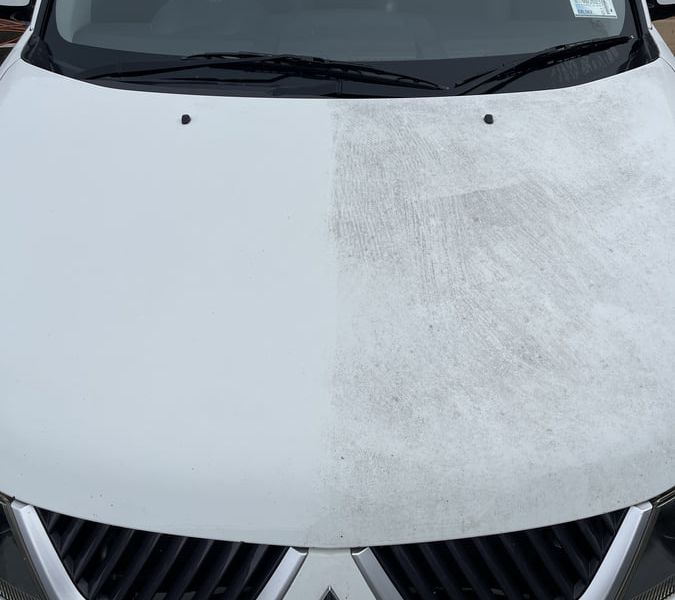
Over time the surface picks up bonded contamination that a normal wash will not shift: iron particles, industrial fallout, tar, tree residue. It builds up in the surface texture and progressively blocks what the coating is trying to do.
A decontamination wash clears that out. Performance usually comes back most of the way, and it costs a fraction of recoating.
How often? There is no universal answer. It depends on where the car parks, whether it is garaged, how much it is driven and what lands on it. A garaged car doing low mileage might go a long time. A work vehicle parked under trees near the coast needs it far more often. Our Nelson maintenance article goes through the seasonal side of that.
Realistic expectations
| Coating | Warranty | Realistic life |
|---|---|---|
| White | 5 year | 3-5 years |
| Black | 9 year | 7-9 years |
Both go longer with good care and can be extended with toppers. Both go shorter if the car goes through automatic washes every fortnight.
Quick reference
Do:
- Wash when it needs it, using clean media and a pH-neutral shampoo
- Dry it rather than letting it air-dry
- Remove anything acidic promptly
- Decontaminate periodically
- Get it looked at if performance drops
Do not:
- Use automatic washes, touchless included
- Use dish soap or wax-added shampoos
- Wipe a dry car
- Wash weekly out of habit
- Assume flat beading means the coating has failed
You will hear from us before you need to ask
Two things come with every coating and neither is on the invoice.
A free follow-up clean, which includes a walkthrough of the method above on your own car rather than on a page. And a check-in a year or so after the job, from us, to see how the coating is actually holding up. Nobody asks for that second one. It is how we find out whether what we told someone at the start turned out to be true, and it is usually the point where a surface that has clogged gets caught before anyone starts worrying about a recoat.
If you have not had a coating done yet, our ceramic coating service covers what is involved, and the pricing calculator will give you a figure for your vehicle.
"Aaron followed up today (18 months or so later) to check in how my ceramic coating was holding up. I told him the coating is doing great & I think it's much easier to keep clean."
— Andrew Smith
Coating not performing like it used to?
It is usually a decontamination job rather than a recoat. Get in touch and we will take a look before you spend on anything bigger.
What happens next: Free consultation → Transparent estimate → Professional application → Follow-up care