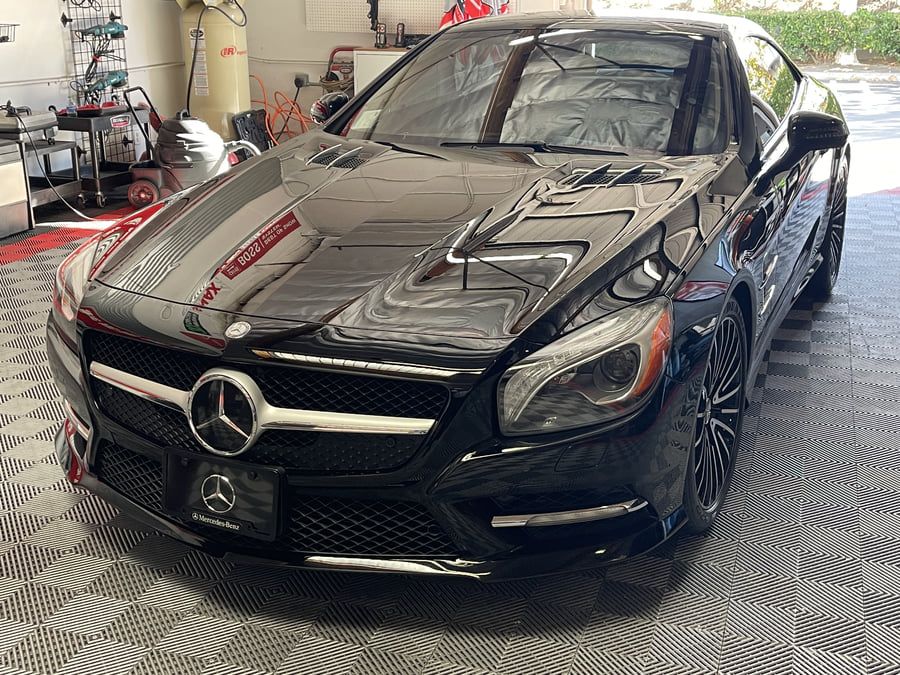
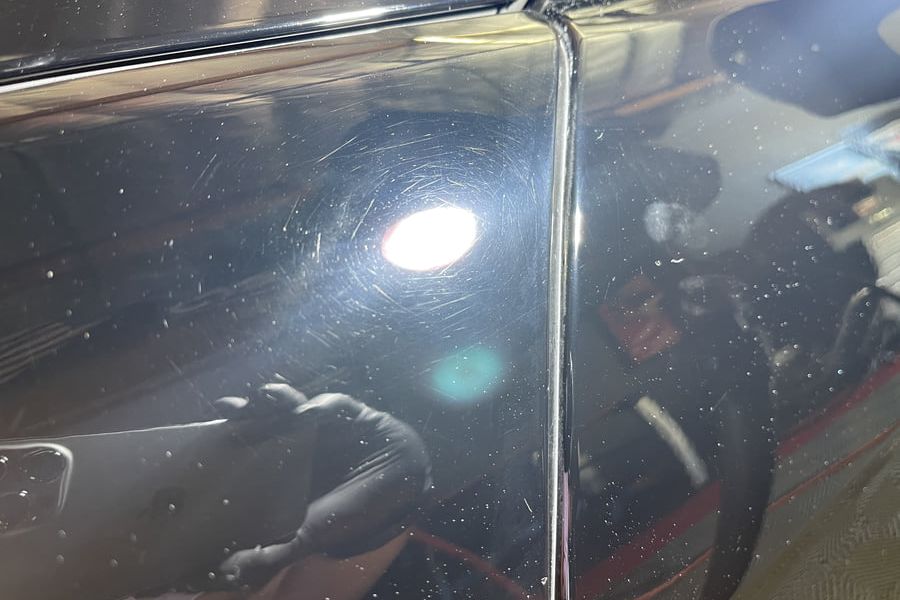
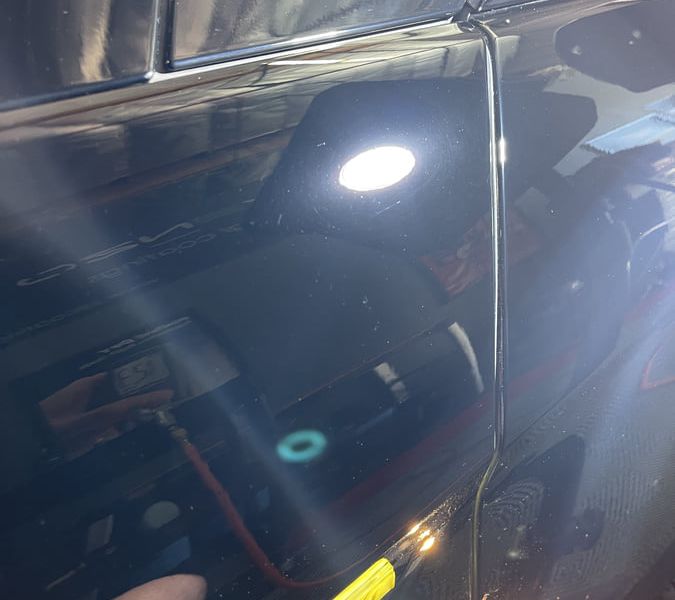
This is the best result we have achieved on a car, and it is not the result most cars can get.
Greater than 95 per cent defect removal is the top end of what is achievable. It required full multi-stage correction, and it was only possible because this particular vehicle had the clear coat thickness to support that much work.
Most people doing a standard single or two-stage polish see about 50-60% of defects removed. On newer cars, expect less rather than more, because modern paint is thinner. Both numbers are true, and quoting the first without the second is how customers end up disappointed.
What the car arrived like
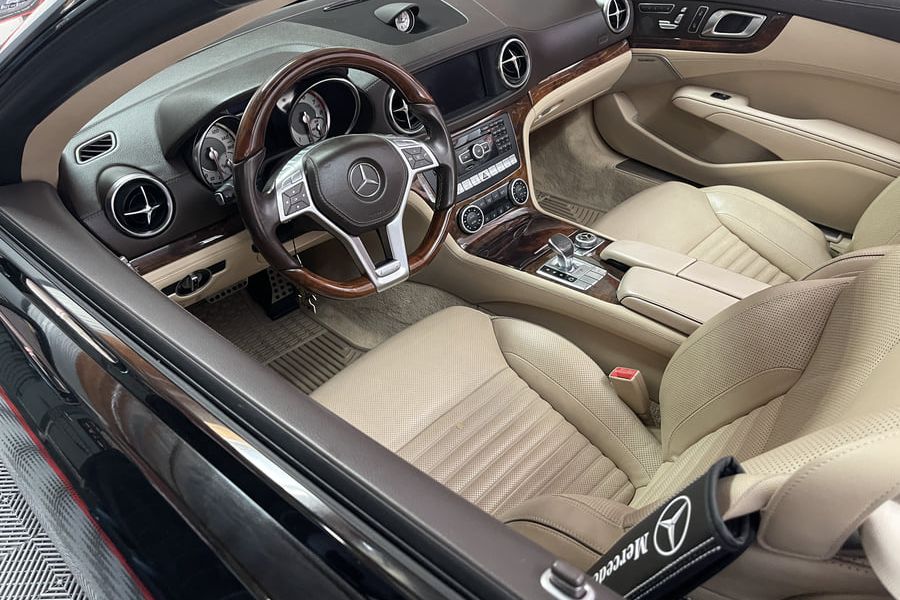
An SL550 with years of accumulated paint damage. Swirl marks throughout, deeper scratching in places, and the general dullness that comes from a long life without correction.
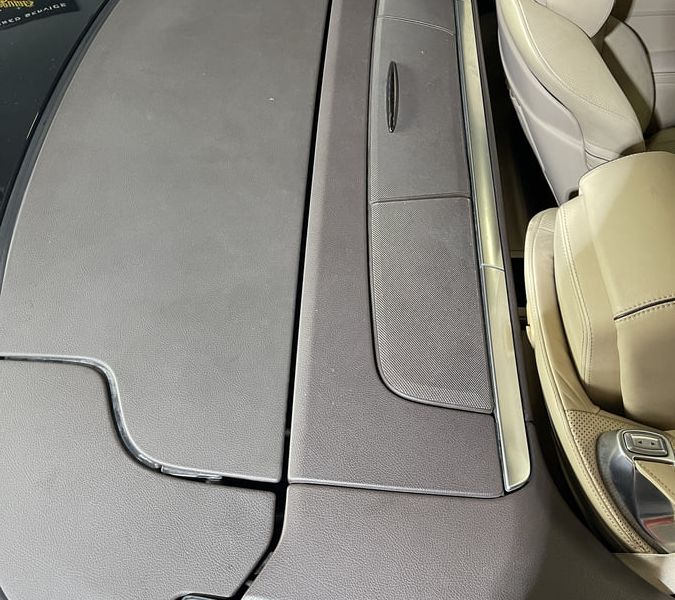
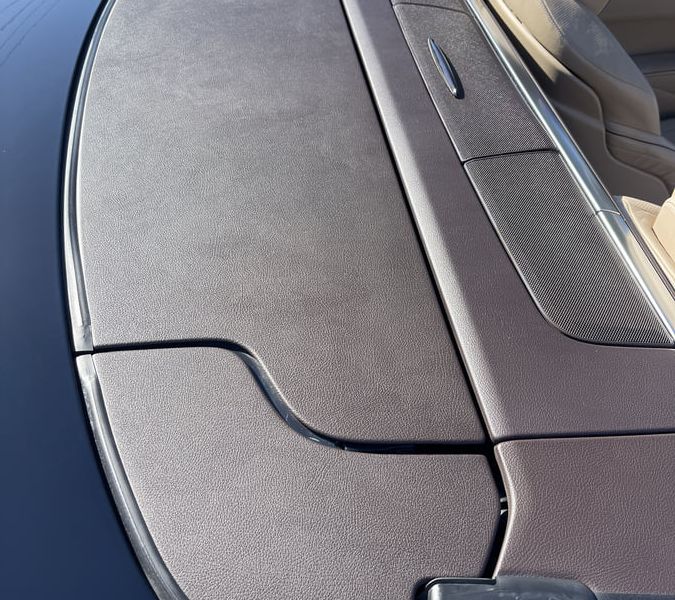
The interior needed work as well, particularly the plastics and trim, which had faded and stiffened in the way they do over time.
The process
Not a fixed number of stages, despite how these jobs usually get described. It went where the paint needed it to go.
Inspection
Under proper lighting, establishing what the paint actually was, how much clear coat there was to work with, and how far correction could safely go. This is what determined everything that followed.
Wash and decontamination
Full decontamination including clay bar and tar removal. Correction over a contaminated surface just drags contamination around, so nothing else can start until this is done properly.
Correction
Multiple stages, working progressively rather than aggressively. The aim at each stage was to remove as little clear coat as possible while still levelling the defects.
Polishing and refinement
Refining the surface after the cutting stages, which is what produces the clarity rather than just the flatness. Inspection again here before anything went on top.
Coating
Applied over corrected paint, panel by panel. Because the correction came first, what the coating preserved was the restored finish rather than the original damage.
Final inspection
Checking the whole car again under lighting rather than signing it off in the driveway.
Inspection appears three times in that list. That is deliberate, and it is most of the difference between a good result and a rushed one.
The interior
The plastics and trim had faded and hardened, which is normal on a car of this age and difficult to reverse convincingly.
Why this result is not the normal one
Worth being specific, because case studies are where expectations get set unrealistically.
The paint could take it. Multi-stage correction removes more clear coat than a single stage. This car had enough to spend. Many do not. Gauge readings on 2017 cars have come back as low as 1.9 mil, which is about 48 microns for the entire paint system, against about 70 microns for a human hair.
The time was justified. Multi-stage work on a whole vehicle is a significant undertaking, and the cost reflects that. On most daily drivers it is not the sensible choice.
Perfect paint is rarely the goal. Unless a car is going to a show, chasing the last few per cent usually costs more than the visible improvement is worth, and it spends clear coat you cannot get back.
What the coating contributed
The correction produced the finish. The coating is what keeps it.
Without it, the restored paint would start accumulating marks again from the first wash, on the same timeline it did originally. With it, the surface is harder, easier to clean, and protected against the UV and chemical damage that does most of the long-term harm.
That is the whole relationship between the two, and it is why the order matters. Our paint correction article covers it properly.
"Aaron at Glossworks did an amazing job on my car, both inside and out. Feels and looks like it's brand new. Even the steering wheel looks great (I thought it was sun damage but Aaron managed to spruce it up)."
— Liam Galbreath
What this costs
Work at this level is quoted per vehicle, because the correction is the variable rather than the coating.
For reference, standard coating pricing on a sedan is $960 for White and $1,440 for Black, both including full decontamination and light polishing. Correction beyond that typically starts around $500, with multi-stage work scaling from there. Full pricing is in our cost guide. Our pricing calculator will give you a figure for your own vehicle straight away.
A note on the photos
Every image here is this car, photographed during the job.
There is no stock photography anywhere on this site. When you see a before and after on these pages, it is a real customer vehicle and a real result, which is worth saying because a good deal of detailing imagery online is neither.
Wondering what your car could look like?
Every vehicle is different, and the paint sets the ceiling. We will look at it properly and tell you what is realistic.
What happens next: Free consultation → Transparent estimate → Professional application → Follow-up care