The pencil hardness scale used across the industry runs from very soft leads up to 9H at the hard end.
That is the top of it. So what exactly is 10H?
It is a manufacturer designation for coatings formulated beyond the top of the standard test. Not a higher score on the same scale, because the scale does not go any higher. That is worth knowing before you weigh up the two, because the numbers do not mean quite what they appear to mean.
None of which makes 10H a marketing invention. Our Black coating genuinely is harder and it genuinely lasts longer. It just is not twice as good because the number is one higher.
What the pencil test actually measures
A set of graded pencil leads is drawn across the coated surface under controlled pressure. Whichever grade first leaves a mark tells you the hardness rating.
It is a real, repeatable test, and it measures exactly one property: resistance to being marked by something drawn across it.
It tells you nothing about:
- UV resistance, which is what matters most in Nelson
- Chemical resistance against bird droppings, bee droppings, sap and salt
- How well the coating bonds to the clear coat
- How long the water behaviour lasts before it starts fading
- Whether it will crack or age over the years
A coating can score well on hardness and still be mediocre at everything else. That is why we do not pick products by that number.
Does the difference matter in practice?
Customers ask this constantly. It depends on the job.
Think about how sharp a knife is. Cutting a banana, it barely matters. Cutting a carrot, a blunt knife may not do the job at all. Butchers and chefs carry a range of knives for exactly that reason.
9H and 10H are two different knives. 9H is a decent sharp knife, and if that is what the budget allows it will work well. If you can afford the sharpest one, there is not much reason not to.
Side by side
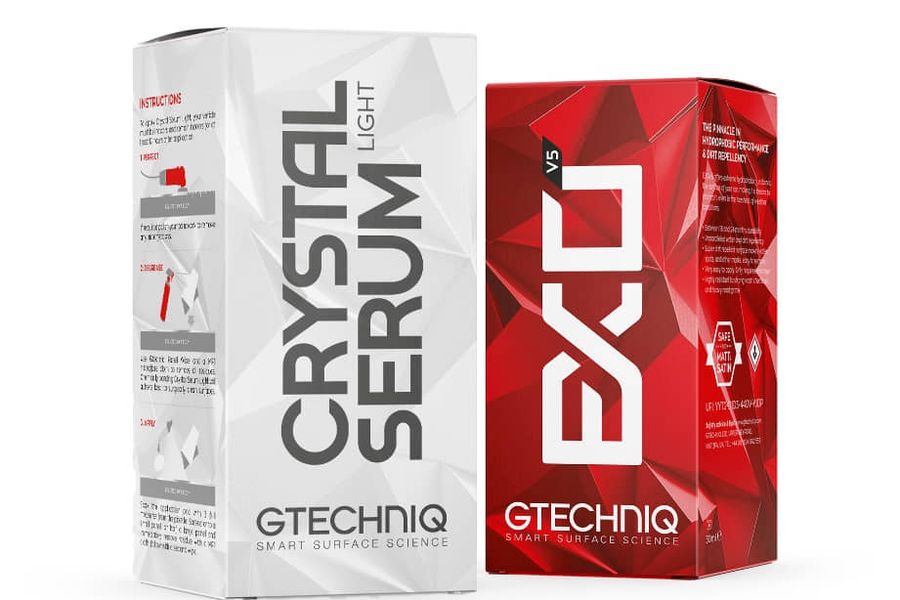
| White | Black | |
|---|---|---|
| Hardness | 9H | 10H |
| Warranty | 5 year | 9 year |
| Realistic life | 3-5 years | 7-9 years |
| Heat resistance | 600°C | 600°C |
| Coverage | Paint | Paint |
| Sedan price | $960 | $1,440 |
| Cost per week | $3.69 to $6.15 | $3.08 to $3.96 |
| Who it suits | Most daily drivers | Cars you are keeping a while |
The heat figure is the coating’s own resistance, not the panel underneath it, and it is not a fire rating.
Look at that table and the hardness row is the least interesting one. The row that should decide it is the life. Roughly double the expected years, for about 50 per cent more money.
What actually wears a coating out
Not scratching. Washing.
The bond itself is permanent, much like the clear coat on your car. What the warranty period is written against is the coating cracking and aging. What genuinely degrades performance over the years is washing and general wear, and that is not covered by any warranty.
Which means two identical cars, coated on the same day with the same product, can look quite different four years later depending entirely on how they were washed. The hardness rating had nothing to do with it.
Our maintenance guide covers what actually extends the life, and washing technique is the single biggest factor in it.
Neither one is scratch-proof
Worth saying plainly, because the hardness numbers invite the opposite conclusion.
A coating may reduce light marring from routine washing, and for an average driver it may reduce the likelihood of small stone chips. It is not scratch-proof and it is not chip-proof. Anything that would gouge your clear coat will still gouge a coated car.
We have written up the claims that get overstated separately, since this is the one people most often arrive believing.
Nelson specifically
The things that actually attack paint here are not the things hardness protects against.
UV is the big one. Oxidised and peeling paint is a common sight locally, particularly on red vehicles. That is a chemistry problem, not a hardness problem.
Salt. Most of Nelson is coastal, and Rocks Road takes the worst of it in stormy weather.
Seasonal contamination. Bee droppings in spring, bird droppings through summer, blossom and then fruit and then the seeds birds drop after eating them, leaf tannins in autumn, road grime through winter.
Every one of those is resisted by the coating’s chemical and UV performance rather than by how hard it is.
"Very happy with work done. Aaron talked me through the process and gave good advice on paint. Certainly recommend."
— Steffan Eden
How we choose
We do not pick coatings by hardness rating. We look at what the paint is, how the car is used, where it lives, and how long you are keeping it.
A car that lives in a garage and does low mileage has completely different needs to a work vehicle parked outside under trees. The hardness number is the same for both. Everything else is not.
Preparation matters more than either choice, because a coating locks in the condition of the paint underneath it. There is more on that in our paint correction article.
The short answer
For most daily drivers, White. It does the job well and the price reflects that.
Black if you are keeping the car and want the longest protection we install. Buy it for the extra years rather than for the hardness figure, because the years are the part you will actually notice.
If you want the full picture on what either one gives you, our benefits article sets it out, and the cost breakdown covers pricing across all vehicle sizes. Our pricing calculator will give you a figure for your own vehicle straight away.
Not sure which one suits your car?
Tell us what you drive, where it parks, and how long you are keeping it. That answers the question faster than any spec sheet.
What happens next: Free consultation → Transparent estimate → Professional application → Follow-up care