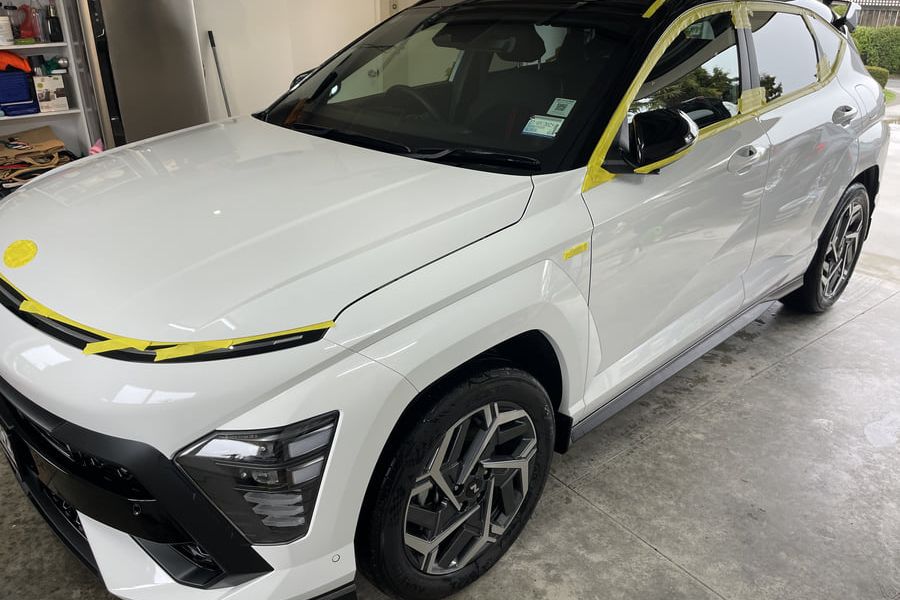
Drive along Rocks Road on a clear afternoon and look at the red cars. Not the new ones, the ones that are eight or ten years old. A lot of them have gone chalky across the roof and the top of the bonnet, and some are peeling. That is not neglect. Most of those owners washed their cars regularly. It is Nelson sun doing what Nelson sun does, on the panels that face straight up at it.
That is what ceramic coating is really about. Not making a car look shiny for a weekend, but what the paint looks like in year eight.
Wax sits on top of the paint and lasts about four weeks. A sealant might last up to about 12 weeks. A ceramic coating bonds to the clear coat and stays there. Below are the ten things that actually changes, and where each one has limits worth knowing about.
1. Superior paint protection
A coating puts a hard layer over your clear coat that is considerably more durable than wax. Our Black coating carries a 10H rating, White is 9H.
That hardness may reduce:
- Light scratches and swirl marks picked up during washing
- Marring from dust and grit dragged across the panel
- Damage from washing technique that would mark unprotected paint
- Etching from contaminants that sit on the surface
It also resists heat to 600°C. To be clear about what that means, that is the coating’s own heat resistance. It is not a fire rating and it says nothing about the panel underneath.
Does 9H versus 10H actually matter?
Customers ask this constantly. It depends on the job.
Think about how sharp a knife is. Cutting a banana, it barely matters. Cutting a carrot, a blunt knife may not do the job at all. Butchers and chefs carry a range of knives for exactly that reason. 9H and 10H are two different knives. 9H is a decent sharp knife, and if that is what the budget allows it will work well. If you can afford the sharpest one, there is not much reason not to.
We have written about the difference between 9H and 10H in more detail if you want the longer version.
2. Deeper gloss and colour
Coating enhances how light comes off the paint. Colour reads deeper, reflections are clearer, and the finish has the wet look people associate with a show car.
This is a genuine optical effect rather than a marketing claim, and it comes from two things working together: the coating itself, and the preparation underneath it. Light polishing is part of every coating we do, and flattening the surface is a large part of why the result looks the way it does.
Most of the visual improvement people notice comes from the preparation. The coating then locks that condition in and holds it, which is the part wax cannot do. That relationship between polishing and coating is worth understanding before you book anything.
3. UV defence
Nelson gets significant UV for much of the year, and it is the single most visible cause of paint damage we see locally. Oxidised and peeling paint is common here, especially on red vehicles.
A coating acts as a sacrificial UV layer over the clear coat. It may reduce:
- Oxidation, the chalky dullness that sets into horizontal panels first
- Colour fading, particularly on reds and dark colours
- Clear coat breakdown, which is the point where the damage stops being fixable
Once a clear coat has actually failed and started peeling, no coating reverses that. This is the thing we most often have to tell people, and it is why waiting is expensive.
4. Water beading and self-cleaning
A coated surface is hydrophobic, so water pulls into tight beads and runs off rather than spreading into a flat film across the panel.
In practice that means:
- Much less standing water left on the car after rain
- Less dirt sticking during wet weather
- Contaminants that rinse away rather than needing to be worked at
- Better visibility if the windscreen is treated too
Does a coating stop water spots?
Not on its own, and this is worth getting right because it is commonly explained backwards.
Water spots are mineral deposits left behind when water evaporates. A coating makes water bead, and a bead that dries where it sits still leaves its minerals behind. Beading is not immunity, and concentrating water into droplets concentrates whatever is dissolved in them.
What actually helps is two things working together. The self-cleaning effect carries away most of the contaminants that would otherwise stain, and beaded water runs off far more readily than a flat film, so much less of it stays on the panel long enough to dry there at all.
The risk is also not really rain. Rain carries relatively few dissolved minerals. Tap water carries considerably more, which is why the highest-risk moment is washing the car and letting it air-dry, or leaving the hose running over it on a hot day.
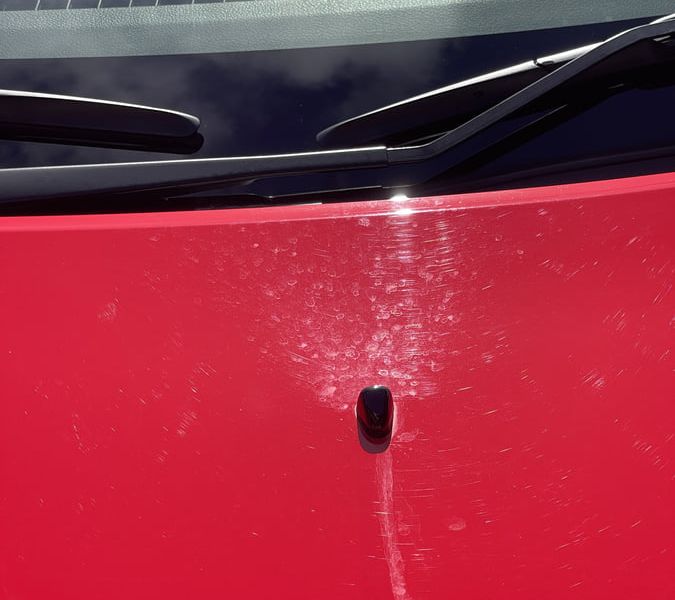
Our guide to washing a car without marking it covers the technique side of this properly.
5. Chemical resistance
Bare paint is vulnerable to anything acidic sitting on it. A coating gives you a barrier and, more usefully, time to get it off before it etches.
Around here the usual offenders are specific and seasonal:
- Spring brings bee droppings, which are acidic and surprisingly stubborn
- Summer brings bird droppings, which etch fast in the heat
- Autumn brings leaf fall and the tannins that come with it
- Winter brings road grime
- Cherry blossom drops flowers, then fruit, then birds eat the fruit and drop the seeds
Add coastal salt, though it is the one people overestimate. Most of Nelson is coastal and Rocks Road takes the worst of it, but mainly in stormy weather and over a short stretch of road. Nelson is not a place where the roads get salted, so if you have read overseas winter-salt advice, set it aside.
"This is Nelson and I get a lot of sand & salt on the car not to mention the intense sun. Very happy with the results. In fact his coating will probably outlast the mechanics & electronics on my car."
— Andrew Smith
6. Easier washing, which matters more than it sounds
A coated surface is smoother, so dirt does not key into it the same way. Washes are quicker and need less physical effort.
That sounds like a convenience benefit. It is actually the protection benefit, and it is the one most articles miss.
Almost all the swirl marks on a normal car come from washing it, not from driving it. Every wash, every wipe down, every pass with a polish is contact with the paint, and each one leaves marks too fine to see on their own. Over five years of regular washing that accumulates into the fine swirling you notice in direct sun.
A coating reduces how hard you have to work at the paint to get it clean. Less work means less contact, and less contact means less accumulated damage. That is why a coated car generally looks better at year five than a waxed one, even though waxing costs less in cash.
7. How long it actually lasts
White gives 3-5 years for an average user. Black gives 7-9 years. Both go longer with good care and can be topped up.
The longevity question deserves a more careful answer than it usually gets, because “lifetime” gets used loosely in this industry.
Pretty much all coatings last a lifetime on the surface. The bond does not fail. But like house paint, a coating can start to crack and age, and that cracking and aging is what the warranty period is actually written against. No cracks, and it will last indefinitely.
What genuinely degrades a coating is washing and wear. That is not covered by any warranty, and it is the reason two identical cars coated on the same day can look different four years later.
- Wax lasts
- about 4 weeks
- Sealant lasts
- up to about 12 weeks
- White coating
- 3-5 years
- Black coating
- 7-9 years
Then it needs redoing
depending on the specific product, storage, and use
5 year warranty
9 year warranty
8. Better condition at resale
A coating will not add a line item to what your car is worth. What it does is keep the paint in the condition that makes a buyer feel good about the car.
Paint that has not accumulated five years of swirl marks photographs better, presents better in person, and does not prompt the conversation about whether it needs a polish. On a car being sold privately that matters.
If you are weighing this up, the useful comparison is not what the coating costs today. It is what you think the car looks like in five years with it, against what it looks like without.
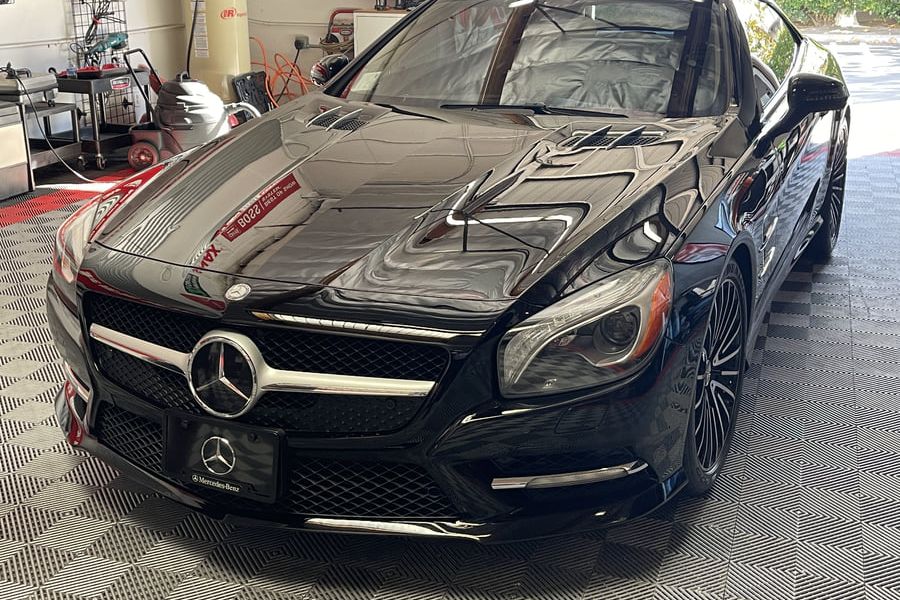
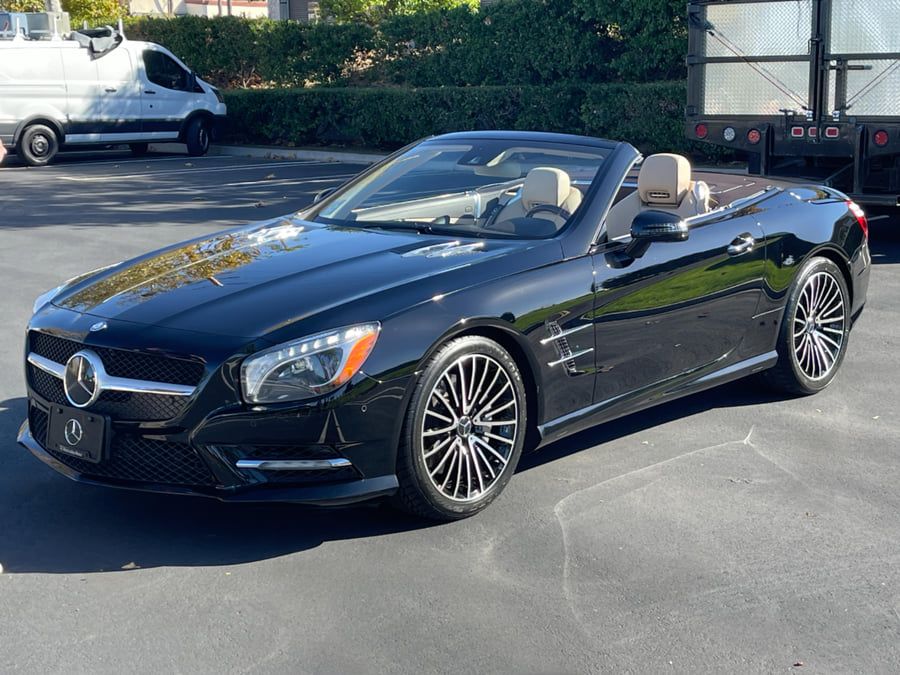
The full write-up of that job is in our Mercedes SL550 restoration case study.
9. It is not only paint
Coatings can go on more than panels:
- Wheels, where brake dust bonds hard and is unpleasant to remove
- Glass, which noticeably improves wet-weather visibility
- Plastic trim, which fades and chalks faster than paint does
- Headlights, particularly after restoration, to slow the yellowing coming back
- Interior surfaces, where the benefit is mostly stain resistance and easier cleaning rather than gloss
We do not hold stock of every one of these. They depend on the vehicle, what you actually need, and what you want to spend. It is a conversation we have at the inspection rather than a fixed package.
10. What it costs over time
One coating instead of repeated waxing for years. Here is what we actually charge, on a sedan.
| Coating | Warranty | Realistic life | Sedan price | Per week |
|---|---|---|---|---|
| White | 5 year | 3-5 years | $960 | $3.69 to $6.15 |
| Black | 9 year | 7-9 years | $1,440 | $3.08 to $3.96 |
| Diamond Show Car | 20 year | Show cars, not daily drivers | $3,960 | Not stated |
That last column divides the price across the realistic lifespan rather than the warranty term, and it flips the usual comparison: Black costs 50 per cent more on the day and less per week, because it lasts roughly twice as long. Diamond is blank because quoting its 20-year warranty as a lifespan would be doing the thing we spend most of this article warning about.
Decontamination is included in every one of those. Paint correction is separate, priced as needed, and typically starts around $500 unless it is a small area only. There is a fuller breakdown in our guide to ceramic coating costs in Nelson, and our pricing calculator will give you a figure for your own vehicle without anyone having to ring you.
We also have an entry-level coating lasting one to two years, and a graphene option, both priced on application. Graphene costs more and claims to go beyond ceramic, but we have not seen that proven over the long term yet, and the short-term gains rarely justify the extra. We will apply it if you want it.
Why this matters more in Nelson
Four things stack up here in a way they do not everywhere:
Sun. High UV for much of the year, and it is the damage we see most.
Salt. Most of Nelson is coastal, and Rocks Road, which runs right along the waterfront, takes the brunt of it in bad weather.
Seasonal contamination. Bee droppings, bird droppings, blossom, fruit, seeds, leaves, road grime. There is something landing on your paint most of the year.
Where the car lives. A garaged car belonging to someone retired has a completely different exposure profile to a work vehicle parked outside under trees. There is no single correct maintenance schedule, which is why we would rather look at your car than hand you a calendar.
Choosing between them
White is our go-to and what most people choose. It balances cost, life and protection sensibly, and for a daily driver it is usually the right call.
Black is the step up. Longer life, harder coating, higher price. If you are keeping the car a while and want the best available protection, this is it.
Diamond Show Car is genuinely niche. Very high-end show cars, not daily drivers. It is the wrong choice for most people.
If you are not sure, that is what the inspection is for. We would rather talk you into the right coating than the expensive one.
Getting it done
We are mobile, which for ceramic coating is unusual. We come to you, and the coating is applied and cured in your own garage. Our background is in flood and fire restoration, which is controlled-environment work, and that is a large part of why this works properly rather than being a compromise.
Practically, that means you carry on with your day. Several of our customers have said the useful part was being able to keep working from home while the car was done.
Not sure which coating suits your car?
Every car is different, and so is how it gets used and where it lives. Have a look at the packages, or get in touch and we will work it out properly.
What happens next: Free consultation → Transparent estimate → Professional application → Follow-up care