

We fit both ceramic and graphene coatings. Around 99% of the time, we recommend ceramic.
Here is why.
Graphene coatings did not appear from nowhere. Our read is that they were developed for markets like California, where the groundwater is heavily mineralised and sprinklers run across driveways and parked cars every day. In that environment, minerals drying on paint are a constant, visible problem. A coating that resists spotting is solving something genuinely painful.
New Zealand water is largely rain-fed into lakes and reservoirs rather than drawn from aquifers. Nelson especially. The dissolved mineral load is a fraction of what a car in southern California deals with.
So the headline benefit you are paying extra for was built around a problem we mostly do not have.
And there is a second thing, which matters more.
The part you pay extra for is the part that fades first
Most products sold as graphene coatings are ceramic coatings with a small amount of graphene oxide added to a silica base. The graphene proportion is usually small.
That is worth sitting with, because it changes what you are actually buying.
Our view, from what we have seen, is that the graphene effects last around two years. The ceramic base underneath carries on working well past that, exactly as a ceramic coating would.
So the premium buys you roughly two years of a marginal benefit, sitting on top of a ceramic coating you could have had for less.
What ceramic coatings have going for them
Ceramic coatings are silica based. They bond to the clear coat and stay bonded.
They remain our default for two reasons: the results are genuinely exciting, and we know exactly what happens to them over the years that follow.
Known durability. 3-5 years from our White coating, 7-9 years from Black, longer with sensible care. Those are not projections from a lab. They are what we see on cars in Nelson. There is more on what each coating actually gives you, and on how the 9H and 10H grades differ.
Water behaviour that holds up. Rain beads and runs off rather than spreading into a flat film across the panel, so far less water stays put long enough to dry there. Worth being precise about this, since it is often explained backwards: beading does not make a car immune to water spots. A bead that dries in place still leaves its minerals behind. What reduces staining is the run-off, and the self-cleaning effect carrying away the contaminants that cause it.
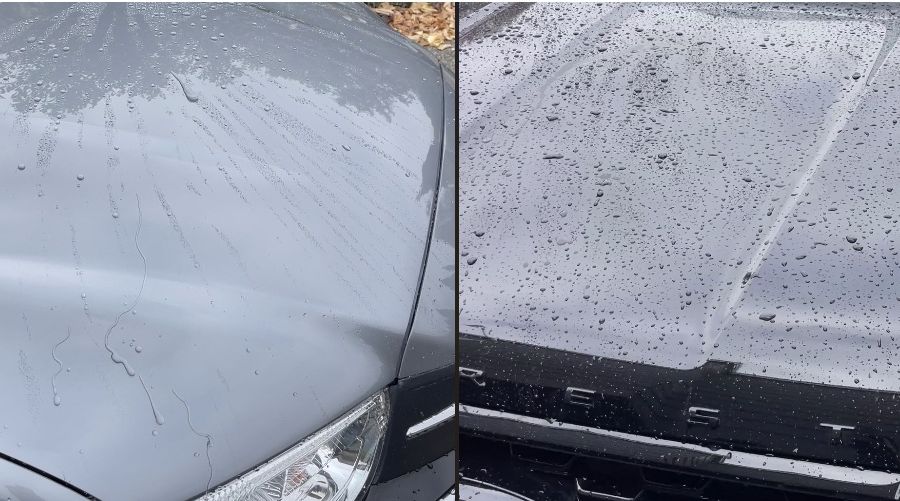
Chemical resistance. Bird droppings, bee droppings, blossom, sap, and coastal salt all etch bare paint. A coating buys you time to get them off before they do. Our maintenance guide covers how often that actually needs attention in Nelson.
A settled application process. The technique has been refined over many years. There are fewer unknowns, which matters when someone is trusting you with their car for the day.
What graphene coatings promise
Graphene is an interesting material and the claims made for these coatings are not nonsense. The usual ones are:
- Better heat dissipation across the panel
- Reduced water spotting, on the theory that heat spreads rather than concentrating under a droplet
- Anti-static behaviour, meaning less dust attraction
- Longer life than ceramic
The first three are plausible and there is reasonable evidence for them in the short term.
The fourth is the one to be careful about. It is a claim about time, and only time settles it.
The spotting claim is also the one worth reading closely. It is a real mechanism: a bead of water sitting in the sun concentrates both the minerals and the heat, and better heat dissipation across the panel would reduce that. The question is not whether it works. It is whether it is worth paying for where you live.
| White ceramic | Graphene | |
|---|---|---|
| Chemistry | Silica based | Silica based, with graphene oxide added |
| Sedan price | $960 | Around $1,150 to $1,250 |
| Cost per week of the graphene effect | $3.69 to $6.15 across three to five years | Around $11 to $12 across two years |
| Expected life of the effect | 3-5 years | About 2 years, then the ceramic base carries on |
| Warranty | 5 year | Discussed at the inspection |
| Field track record | Many years, including coastal | Comparatively short |
| Heat behaviour | Resists heat to 600°C | Claimed better dissipation across the panel |
| What we know about year seven | We have seen it | We have not |
The heat figure above is the coating’s own resistance, not the panel underneath it, and it is not a fire rating.
The weekly row needs one qualification, because on its own it overstates the case. It divides the graphene price by the two years the graphene effect lasts, not by the life of the whole coating, and the ceramic base underneath keeps working after that. So it does not mean graphene costs $11 a week. It means the premium over White buys you roughly two years of a marginal extra benefit, and once you put a weekly figure on those two years the size of the premium becomes hard to ignore.
So why do we still recommend ceramic?
Because the decision is about years, and years are the one thing graphene has not had yet.
A coating is not something you re-evaluate every few months. You put it on and live with the outcome for the better part of a decade.
When we recommend something, we are making a prediction about how it behaves in year five and year seven, in Nelson, on a car that gets washed imperfectly and parked outside. For ceramic we can make that prediction from experience. For graphene we would be passing on the manufacturer’s projection, at a higher price.
Look at what the serious brands are selling
This is the argument we find hardest to talk anyone out of.
Graphene coatings have been on the market for years now. Long enough for any manufacturer to have adopted them if the chemistry were clearly better. And yet the flagship paint coatings from the brands that built their names on durability are still silica based. Gtechniq, Optimum, Dr Beasley’s.
Those are companies whose whole business rests on a coating still performing in year seven, because that is what their warranties are written against. They have the laboratories, the field data and far more to lose from backing the wrong chemistry than any installer does. If graphene were the step forward it is marketed as, they are the ones you would expect to have moved first.
We cannot tell you why each of them has stayed put. What we can say is that it is worth noticing who has and who has not.
When graphene is a reasonable choice
There are cases where it is a fair call:
- You want the newest available technology and the premium is not a concern
- You are after short-term added protection in a specific situation rather than long-term paint preservation
- Your car lives somewhere that genuinely does have hard water landing on it regularly
- You have weighed the trade-off and want it anyway
That last one is a perfectly good reason. It is your car, and the point of laying the evidence out is so you can make that call rather than have it made for you.
What actually determines the result
Here is the thing that gets lost in the ceramic-versus-graphene argument entirely.
The preparation matters more than the choice between them. A coating locks in the condition of the paint underneath it. Put the best product in the world over swirled, oxidised paint and you have preserved swirled, oxidised paint for the next several years.
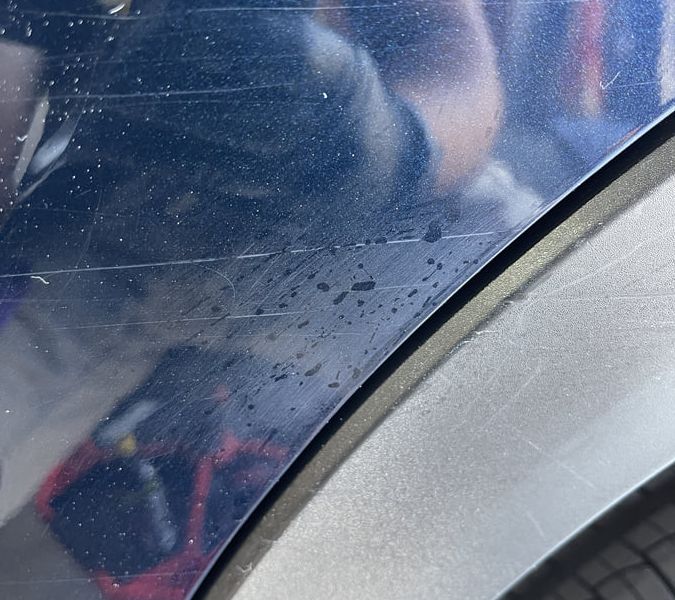
If you want the detail on that, we have written separately on paint correction versus coating and on where swirl marks come from.
Light polishing is part of the preparation on every coating we do. Where paint needs correction beyond that, it is quoted separately and typically starts around $500, less only for a small area. Most cars need a single-stage polish, largely because modern paint is thin enough that anything more aggressive carries real risk.
Realistic expectation: most people doing a standard polish see about 50-60% of defects removed. On newer cars, expect less rather than more. Perfect paint is achievable but usually not worth the cost or the risk of going through the clear coat, and unless the car is going to a show, it is rarely what anyone actually needs.
What this looks like in practice
We are mobile. The coating goes on in your garage and cures there overnight, and you carry on with your day. Our background is flood and fire restoration, which is controlled-environment work, and that is why doing this on site works properly rather than being a compromise.
Whichever coating you land on, the process is the same. We look at the car first, work out what the paint can realistically be brought back to, then quote.
That second step is where the useful conversation happens. A coating is worthwhile on almost any paint if you want it done, but there is a limit to what polishing can recover. Deep scratches, chipped paint, and missing or damaged clear coat do not polish out. Knowing that before the work starts is the difference between a good result and a disappointing one.
"Very professional, with a great result. The car has never looked so new! And the finish meant that it has been easy to clean ever since."
— Tim Stonier
How to decide, in four questions
If you are weighing the two up, these are the questions that actually settle it.
How long are you keeping the car?
Under three years, the difference between the two matters less than the preparation underneath. Longer than that, and the ceramic base is what you are living with either way, so buy the ceramic that suits you.
Where does it park, and what lands on it?
Hard water hitting the paint regularly, from a bore or a sprinkler, is the one situation where graphene is solving a live problem. Rain, salt air, and sun are ceramic territory.
Is the paint worth protecting as it stands?
Get it inspected before you choose a product. What polishing can recover sets the ceiling on the result, and it is the single biggest factor in whether you end up happy.
What is the premium buying you?
Around $200 to $300 more on a sedan, for effects we expect to last about two years. If that is worth it to you, it is a fair choice and we will fit it.
If those four leave you on ceramic, White covers most people well. Black is the step up if you are keeping the car and want the longest protection we offer. Both are on the pricing calculator. Graphene is not, because it is quoted after we have seen the car.
Want a straight answer for your car?
Different cars, different conditions, different budgets. Have a look at what we offer, or get in touch and we will work out what your paint needs.
What happens next: Free consultation → Transparent estimate → Professional application → Follow-up care