
Almost every swirl mark on your car was put there by someone cleaning it.
Not by the road, not by the weather, not by the car park. By a sponge, a brush, a towel, or an automatic wash. The damage that bothers people most about their paint is damage they paid to have done, over and over, a little at a time.
That sounds harsh but it is good news, because it means it is largely within your control.
What a swirl mark actually is
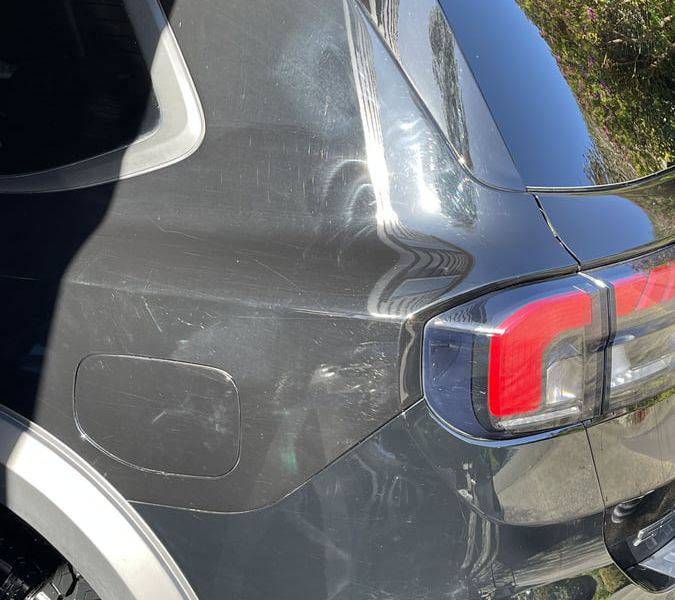
A swirl mark is a very fine scratch in the clear coat.
Individually they are invisible. What you see in direct sun is the collective effect of thousands of them scattering light in different directions, which reads as a hazy circular pattern radiating out from wherever the sun is reflecting.
They are called swirls because of how they are made. A circular washing motion leaves circular marks.
Are they cosmetic or actual damage?
Actual damage, though the practical impact is usually cosmetic.
The scratches sit in the clear coat, which is the layer doing the UV protection. There is less of it than people imagine: we have gauged 2017 cars at about 48 microns for the entire paint system, against about 70 microns for a human hair, and the clear coat is only the top part of that. Sunlight works on that surface first, so it is where UV damage starts, and it is also what polishing takes away. Thin paint fares worse than you would expect here: the research on automotive clearcoats found the UV absorbers disappear faster from thinner films than from thicker ones.
That is the part swirl marks damage. So heavily swirled paint is not only duller, it has lost some of its UV defence, which is why badly maintained cars start fading faster as well as looking worse.
What actually causes them
In rough order of how much damage they do:
Automatic car washes. The single biggest cause. Spinning brushes drag grit across paint at speed. Touchless versions avoid the brushes but rely on stronger chemicals, and they still cannot remove everything before it gets pushed around.
Washing with one bucket. Dirt comes off the car into the water, then goes back onto the paint on the next pass. Every subsequent wipe is a grit-loaded wipe.
Drying with the wrong thing. A bath towel, a chamois, or a microfibre that has been dropped on the ground and shaken off.
Washing too often. This surprises people. Every wash is contact with the paint, and contact is what causes the marks. Washing a lightly dusty car weekly does more damage than leaving it and washing it properly when it needs it.
Wiping dust off a dry car. Grinding dry grit across the panel with a cloth. It is the fastest way to mark paint there is.
Waxing and polishing by hand. Each application means handling the paint again. Wax lasts about 4 weeks, so a regularly waxed car gets handled a lot over five years.
How polishing removes them
Machine polishing removes an extremely thin layer of clear coat, taking the scratches with it and levelling the surface so light reflects evenly again.
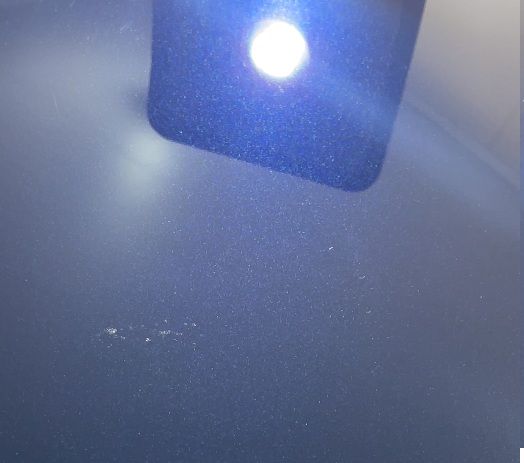
We use a Rupes dual action polisher and work under inspection lighting rather than by eye, because most swirling is invisible under normal light and only shows once the car is back in the sun.
Most cars only ever need a single-stage polish. That is not us cutting corners, it is that modern paint is thin enough that anything more aggressive carries a genuine risk of going through the clear coat, which is not recoverable.
What to realistically expect
Most people doing a standard single or two-stage polish see about 50-60% of defects removed. On newer cars, expect less rather than more.
Getting closer to perfect is possible. The cost climbs steeply, and so does the amount of clear coat you spend to get there.
There is more on the trade-offs in our guide to paint correction and coating.
Stopping them coming back
Correction resets the paint. What happens next is entirely down to how the car gets washed.
Stay out of automatic washes. Including touchless. If you understand the risk and choose it anyway, that is a fair call, but most people have never been told there is one.
Two buckets at minimum, with soap in both rather than one plain rinse bucket. Better still is a single bucket with several wash media, so dirty media never goes back on the paint before it has been cleaned properly.
Wash when it needs it, not on a schedule. Frequency is contact, and contact is damage.
Dry it, and do not let tap water evaporate on the panel. Rain carries very little dissolved mineral. Tap water carries considerably more, and that is what leaves spots.
The full method is in our guide to washing without marking the paint.
Does a ceramic coating prevent swirl marks?
Not exactly, and this gets overstated constantly.
A coating is harder than clear coat, so it may reduce light marring from routine washing. It is not scratch-proof, and anything that would mark your clear coat will still mark a coated car.
What genuinely helps is second-order. A coated surface releases dirt far more easily, so washing takes less physical effort. Less effort means less pressure and fewer passes, and the surface stays cleaner between washes so it needs doing less often.
Over five years that difference in handling adds up to noticeably less accumulated marking. Not because the coating armoured the paint, but because you touched it less.
"Very professional, with a great result. The car has never looked so new! And the finish meant that it has been easy to clean ever since."
— Tim Stonier
Our ceramic coating benefits article covers what a coating does and does not do in more detail, and the myths article deals with the claims that get overstated.
Doing it yourself
Entirely possible, and done carefully it works well. Some of the products available to you are the same ones we use.
What it takes is a machine polisher, decent pads and compound, proper lighting, and time. The polishing itself is not the hard part. The hard part is judgement: knowing what will correct, what will not, and when to stop before you have used up clear coat you cannot get back.
That judgement is what experience buys, and it is the thing that takes longest to build. If you have the time and you enjoy the work, it is a fair choice.
Colour matters more than people expect
Same damage, very different visibility.
Silver and light metallics hide swirling well, because there is little contrast between the mark and the paint around it.
Black, dark blue and dark red show everything, which is why dark cars have a reputation for being hard work. They are not more fragile, they are just more honest.
If you have a dark car and it looks swirled, it may well have no more damage than a silver car that looks fine.
What we would do
Look at the car under proper lighting first, work out what can realistically be recovered, then tell you what that costs before anything starts.
We are mobile, so this happens at your place. The polishing and any coating is done there, and the car stays in your garage overnight if it has been coated.
If correction will not get you where you want to be, that is worth knowing before you spend rather than after.
Correction is quoted once we have seen the paint. Coating prices are fixed and sit on the pricing calculator.
Want to know what your paint would come back to?
Every car is different. Get in touch and we will look at it properly and tell you what is realistic.
What happens next: Free consultation → Transparent estimate → Professional application → Follow-up care